Dr. Wangari Maathai—biologist, mother, environmentalist, Nobel Peace Prize winner, and absolute force of nature.
⸻
What was the problem?
In Kenya, deforestation and environmental degradation were wrecking communities.
Crops failed. Water dried up. Women walked miles for firewood.
The land—once lush—was choking.
And the government?
Corrupt, patriarchal, violent.
No interest in reforestation. Just control.
But Wangari?
She saw a link most people missed:
“You can’t talk about human rights without talking about the environment people live in.”
So what did she do?
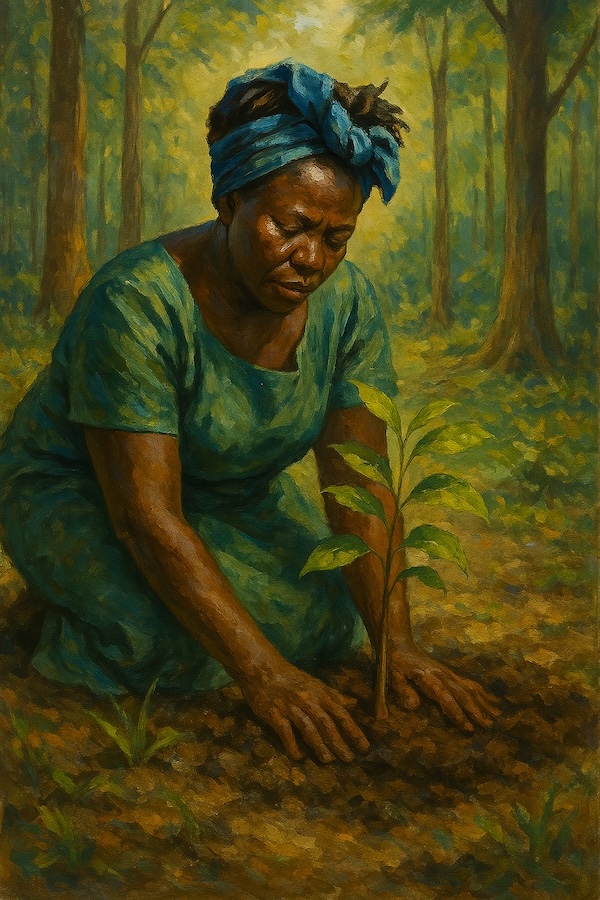
She started planting trees.
Literally.
⸻
The Green Belt Movement was born.
Women planting trees.
Village by village.
Shovel by shovel.
She empowered rural women to restore their land—
and in doing so, restored their power.
They grew food.
They protected water.
They reclaimed their dignity.
50 million trees later, the landscape had changed.
But so had the people.
They didn’t just plant trees.
They started questioning why they had no say in government.
Why their land was stolen.
Why their voices weren’t heard.
This was no longer gardening.
It was revolution.
⸻
The backlash? Brutal.
Wangari was:
• Beaten
• Imprisoned
• Spied on
• Labeled a traitor
• Mocked for being a woman in science
• Told to “go home and mind her husband”
And she didn’t stop.
She once stood in front of bulldozers with nothing but her body and a tree seedling in hand.
They tore down forests.
She planted more.
They tried to erase her.
She became louder.
⸻
Then? History flipped.
Kenya’s dictator fell.
Democracy bloomed.
And in 2004, Wangari Maathai became the first African woman to win the Nobel Peace Prize.
The committee said:
“She thinks globally and acts locally.”
But the people?
They called her Mama Miti.
Mother of Trees.