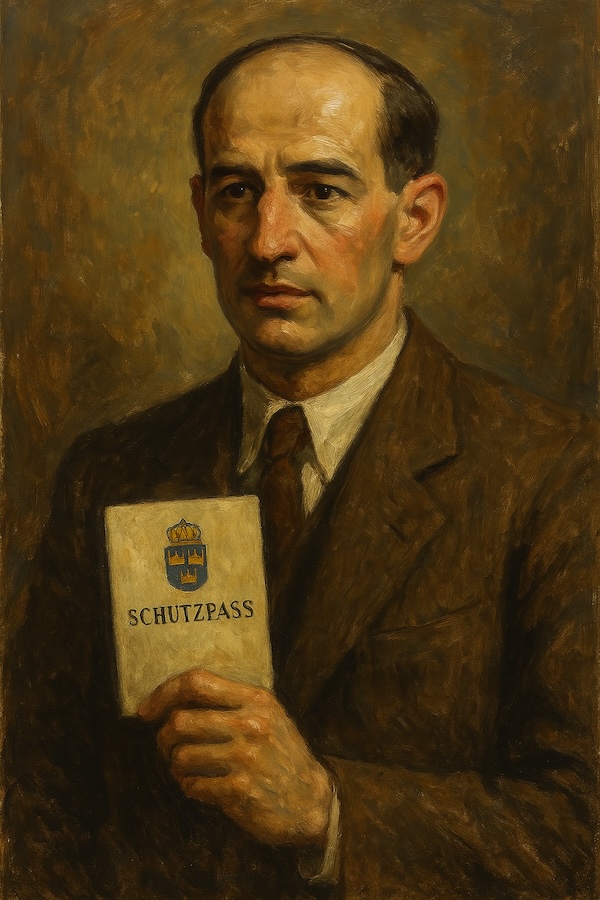
Raoul Wallenberg—a Swedish architect and businessman with no political power, no military training, and no obligation to intervene
Except his conscience said otherwise.
—
The crisis:
Hungary’s Jews were being rounded up.
Deported to Auschwitz.
Killed by the thousands.
The war was nearly over—but the Nazis were speeding up the slaughter.
Most people turned away.
Wallenberg walked straight into the fire.
—
The mission:
He took a diplomatic post in Budapest through the Swedish government.
And used that paper-thin status to start forging protective passports—documents that claimed Jews were under Swedish protection.
They weren’t official.
They weren’t recognized by the Nazis.
But Wallenberg made them look real—stamped, signed, official enough to make a soldier hesitate.
He printed thousands.
—
What did he do?
He set up safe houses—over 30 of them—declaring them Swedish territory.
He pulled people off trains, right in front of guards.
He climbed on deportation trucks, handed out forged documents, and declared, “They are Swedish now.”
Sometimes he bribed.
Sometimes he bluffed.
Sometimes he stared death in the face and said, “No.”
—
What did he achieve?
He saved over 100,000 lives.
One man.
One pen.
One unshakable refusal to look away.
—
What happened to him?
In 1945, the Soviets arrested him—thinking he was a spy.
He vanished into their prison system. Never came home.
Presumed dead.
No grave. No body. No justice.
But those who lived?
They speak his name.
Not because he had to help.
But because he could—and did.
—
And that’s the legacy.
He had every reason to stay out of it.
But he knew:
the power to protect others is the greatest kind of power we’ll ever have.