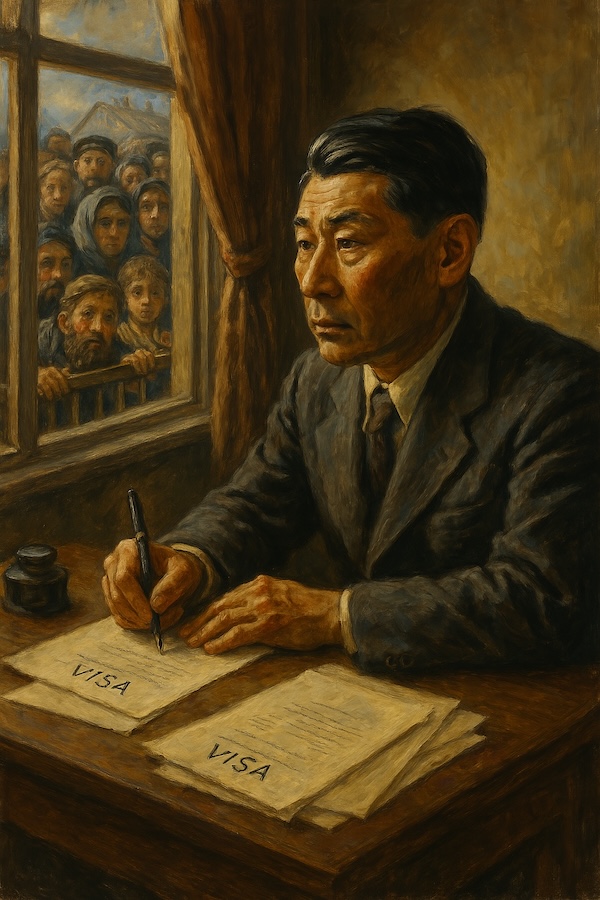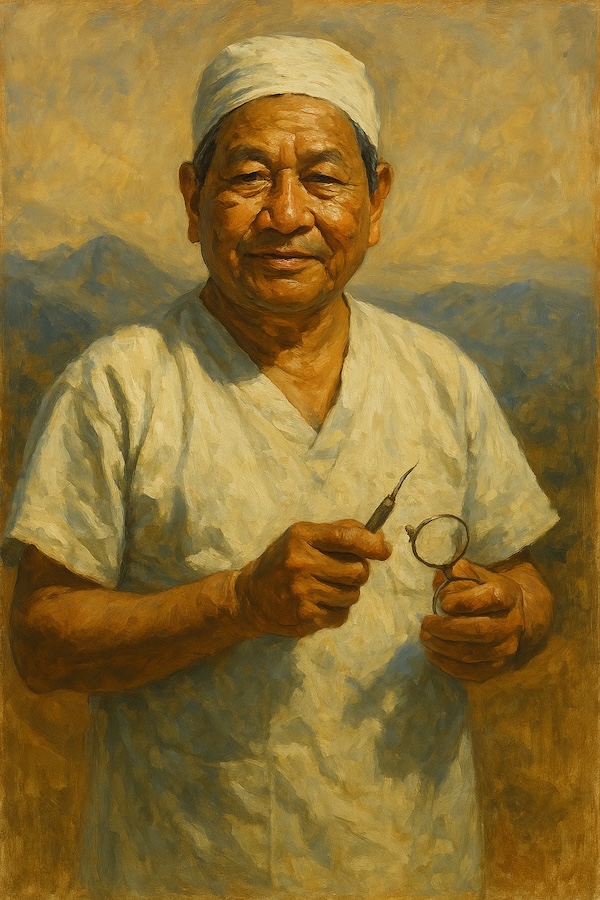
The man: Chiune Sugihara—a Japanese diplomat stationed in Lithuania
The place: A tiny consulate office in a storm about to consume Europe
⸻
What he saw:
Jews from across Poland and Lithuania were lining up outside his consulate.
They weren’t asking for money.
They weren’t protesting.
They were begging—for exit visas.
You see, the Nazis were coming.
And no one else would let them through.
Only one sliver of hope remained:
Japan.
But Japan’s government?
Had already said no.
No helping Jews. No stirring trouble. No going against the alliance with Germany.
⸻
Sugihara’s choice?
He wired Tokyo three times asking for permission.
Three times they said:
“Absolutely not.”
So he turned to his wife.
And said:
“If I disobey, I lose my job. My future. Everything.”
She looked back and said:
“But if you don’t… they lose their lives.”
⸻
So he made his choice.
He wrote visas by hand.
Twelve hours a day. Then sixteen. Then eighteen.
He wrote and wrote until his fingers cramped and blistered.
He kept writing as long as there was ink, and time, and breath.
Over 2,000 transit visas.
Most of them forged. All of them blessed.
⸻
When the consulate closed?
He kept writing them on the train platform as he was being deported.
Tossed them out the window into the crowd of desperate hands.
A literal rain of hope.
⸻
What happened to him?
Japan punished him.
Stripped him of his title.
Buried his name in silence.
He spent the rest of his life selling lightbulbs door-to-door.
No honors. No applause.
Not until decades later, when a researcher in Israel tracked him down.
Turns out—
Those 2,000 visas?
Saved over 6,000 lives.
Some say as many as 10,000 descendants exist today because of him.
⸻
He was asked: Why did you do it?
He said:
“I may have disobeyed my government. But if I had not, I would be disobeying God.”